By: Keith Bellingham
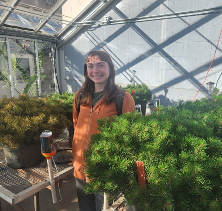
Dr. Alec Kowalewski, Professor of Sustainable Urban Landscapes, and Samantha Leffler, M.S. Student, at Oregon State University are studying plant stress responses to various irrigation schedules using SAGE, a soil water stress visual insight tool developed by Stevens Water Monitoring Systems.
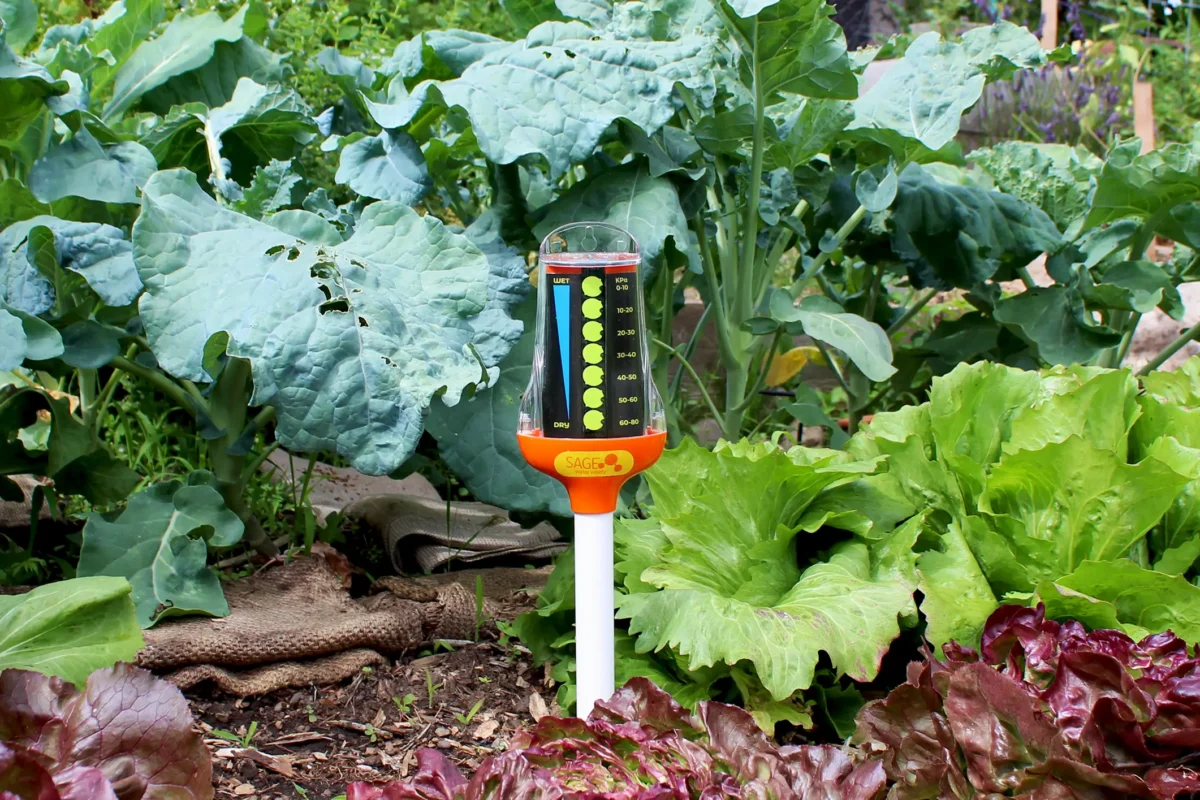
SAGE is a simple, innovative device powered by two AA batteries that connects a gypsum block in the root zone to an easy-to-read coin-flip visual display. The coin-flip mechanism provides an immediate visual reference of the soil water potential, allowing growers to quickly assess plant water stress and irrigation needs in real time. SAGE may be used as a practical alternative to traditional tensiometers or WATERMARK soil sensors.
Mugo Pine, an ornamental evergreen, is the crop being studied under greenhouse conditions. While Mugo Pine is known for its drought tolerance, it requires frequent irrigation when cultivated in pots, which is common practice during nursery production. Determining the correct irrigation level can be challenging. “It is also difficult to gauge irrigation needs of coniferous evergreen plants because they often do not show visible symptoms of drought stress until after the plant has already begun to decline”, explains Dr. Kowalewski, an expert in crop science.
According to the USDA National Agricultural Statistics Service (NASS), the annual wholesale market for ornamental nursery stock is valued at $5.34 billion. Effective irrigation management during the early growth stages in greenhouse production provides significant benefits to wholesalers, retailers, and end customers. These include decreased shipping weight through proper irrigation, reduced risk of disease, improved shelf life, healthier root systems for transplanting, and overall reductions in water usage during the production cycle.
In the study, four different soil water levels are maintained and evaluated during a four-month greenhouse cultivation period. Along with SAGE, soil water conditions are also monitored with HydraProbe soil sensors for volumetric water content and tensiometers for traditional soil water potential measurements as a reference.
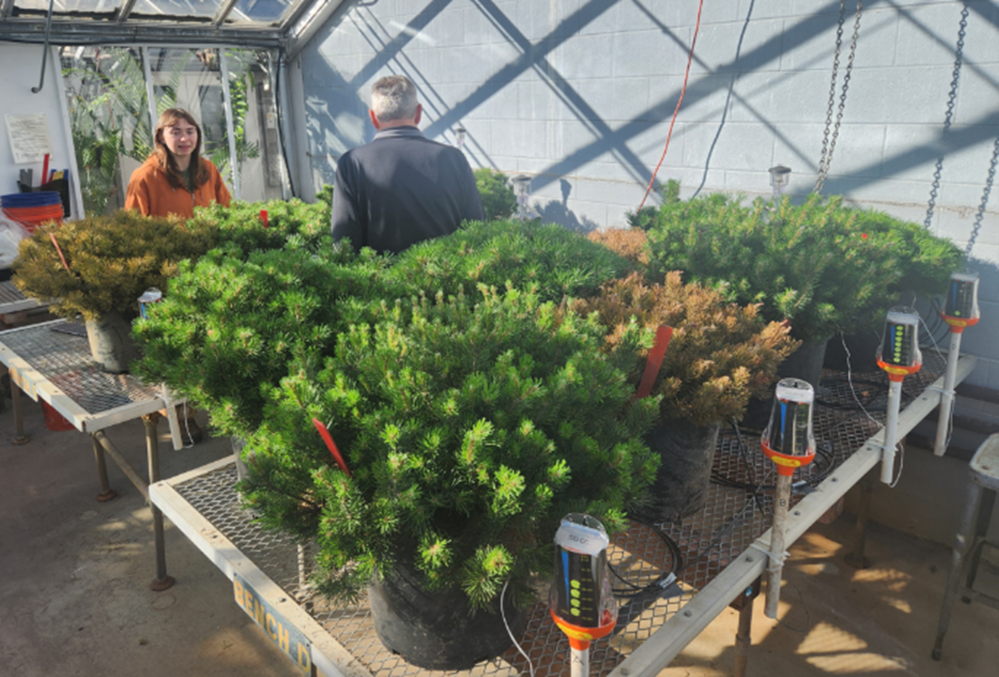
Plant responses to varying water stress levels are evaluated using Normalized Difference Vegetation Index (NDVI) measurements and visual assessments. SAGE is designed to provide a quick visual, cost-effective solution for nurseries’ soil water conditions to help enhance production and quality of the crop.
The purpose of the study is to define drought stress thresholds for ornamental plants and evaluate whether SAGE can serve as an effective visual indicator of plant water status. The goal is to provide commercial nurseries with a simple tool to better understand plant stress and improve irrigation management irrigation at the individual plant level before distribution.
The results of the study are expected to be published in 2026 in the Journal of Horticulture. Preliminary results, two months into the study, show that all plants in the non-irrigated control treatment had died, while all other treatments monitoring with SAGE remained alive. Plants receiving irrigation – regardless of the soil water potential threshold – maintained high NDVI values of 0.9 or greater, indicating strong plant health.
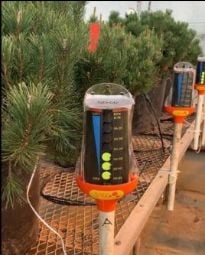
These early findings suggest that irrigation applied when SAGE readings reach 60-80 Kpa (one to two coins visible on the SAGE display) is sufficient to sustain mugo pine during the greenhouse production phase.
Related Product

A visual tensiometer
One or zero yellow coin indicates very dry soil conditions while a full column of (7) yellow coins means that soil moisture is high.