
Is the Heat Index telling the whole story? Every summer, employers, coaches, and safety professionals rely on heat forecasts to make critical safety decisions. But the familiar Heat Index may not accurately represent heat stress experienced in all sun and wind conditions.
Why WBGT Provides a Better Measure of Heat Stress. As global temperatures continue to rise, protecting workers, athletes, agriculture livestock, military personnel, first responders, and others exposed to extreme heat has become an increasingly important safety priority. While the familiar Heat Index is commonly reported in weather forecasts, it was developed to estimate how hot conditions feel in shaded environments based only on air temperature and relative humidity. In many real-world outdoor environments, however, it does not fully represent the environmental conditions that contribute to heat stress.
Exposure to direct sunlight, invisible heat radiation from pavement and buildings, varying wind conditions, and other factors can significantly influence the body’s ability to dissipate heat, yet most of these are not captured by the Heat Index. For this reason, OSHA, the U.S. military, and other occupational safety organizations increasingly use and recommend the Wet Bulb Globe Temperature (WBGT) index as a more comprehensive method for evaluating environmental heat stress. To better represent the environmental conditions affecting the body, the WBGT measurement combines three temperature components:

Many people are surprised to learn that nearly three-quarters of the WBGT calculation comes from the Natural Wet Bulb Temperature, which has the greatest influence on the WBGT measurement.
Although the WBGT equation is standardized, not all WBGT measurements are created equal. The accuracy of the result depends on how the Natural Wet Bulb Temperature is calculated, how radiant heat is measured, and whether the sensing system follows internationally recognized standards.
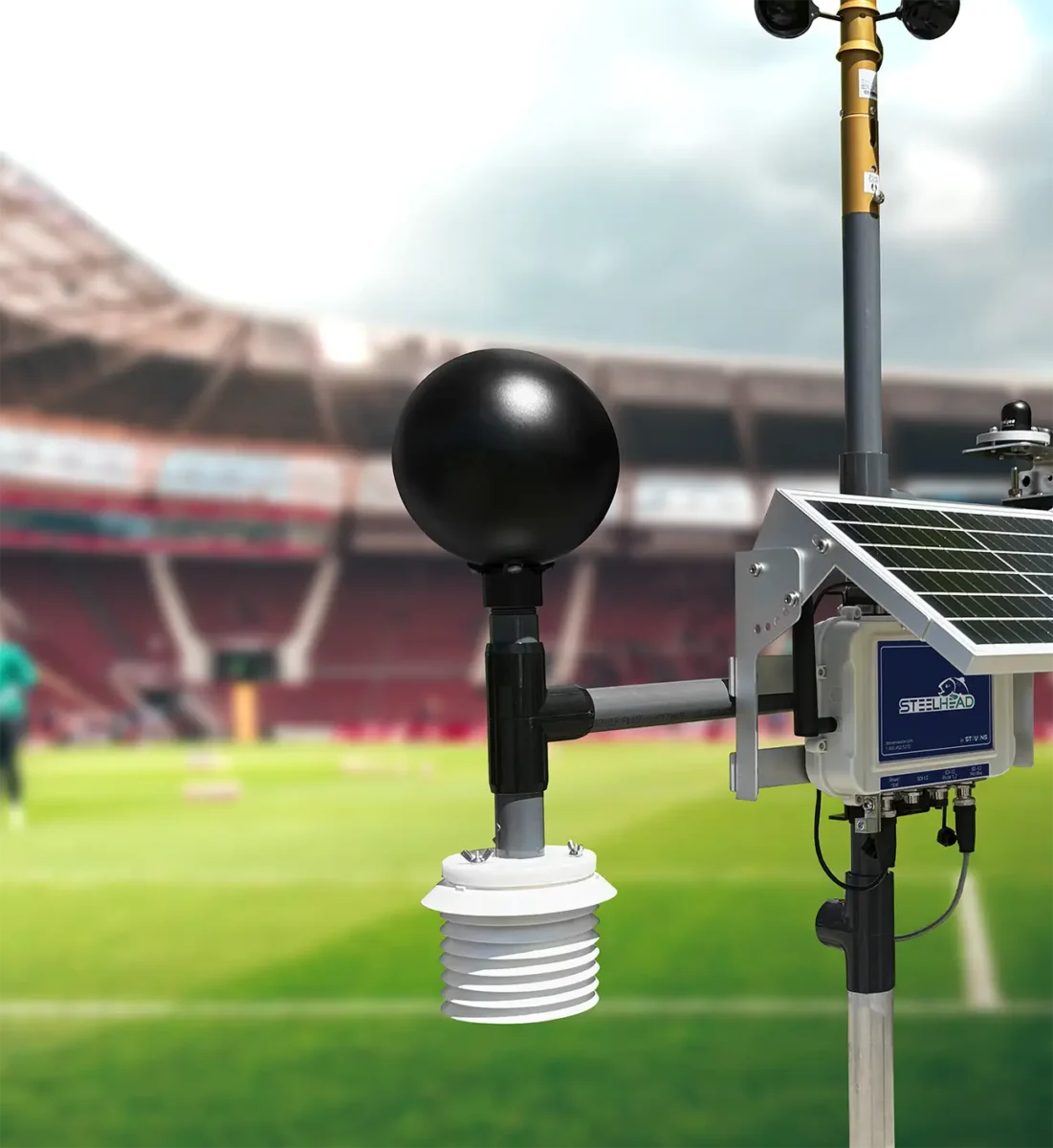
The Science Behind Stevens’ WBGT Solution. Stevens has designed its WGBT Heat Stress Monitoring solution around internationally recognized measurement principles. The system incorporates the Liljegren model for Natural Wet Bulb model, which has been rigorously peer-reviewed and is widely regarded as the “gold standard” method for computing the Natural Web Bulb measurement. The Liljegren model uses air temperature, relative humidity, wind speed, solar radiation, and atmospheric pressure to model actual outdoor heat transfer between the human body and its environment to closely represent how an environment feels to a person. Stevens also utilizes an ISO-compliant 150 mm (6-inch) black globe thermometer, providing a more representative measurement of radiant heat while reducing undesirable wind sensitivity compared to smaller globe designs. Together with rugged environmental sensors, data acquisition, communications, and cloud-based monitoring, Stevens delivers scientifically grounded WBGT measurements to help professionals make better-informed decisions on activities in hot environments.
Better heat stress decisions begin with better measurements. At Stevens, we believe that accurate environmental intelligence starts with scientifically sound measurements. Whether protecting construction crews, utility workers, athletes, military personnel, agricultural operations, or industrial facilities, Stevens combines standards-compliant instrumentation with validated environmental models to deliver WBGT measurements that organizations can trust when making heat safety decisions.


