Jamaica, the third largest island in the Caribbean Sea, has mountains terrain in the interior surrounded by narrow coastal plains. Jamaica frequently encounters tropical storms and hurricanes. Over 60% of the population resides in coastal urban areas, many of which live in potentially dangerous flood zones.
The region has a history with severe weather events. Since the early 2000s, hurricanes Ivan, Dean and Gustav have resulted in considerable damage and loss of lives. In 2024 alone, two hurricanes, Beryl and Rafael, as well as an additional storm, caused substantial property damage, including flooding and landslides that necessitated the evacuation of many residents from low lying flood prone areas.
According to the WEF Global Risks Perception Survey 2024, extreme weather events is the biggest long term over 10 years global risks (www3.weforum.org/docs/WEF_The_Global_Risks_Report_2024.pdf).
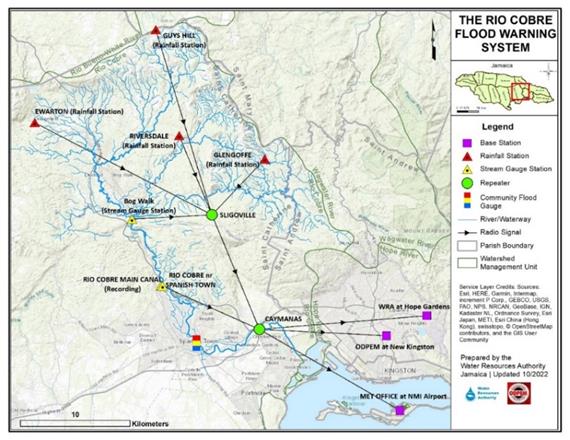
Up until the early 2000’s, the Rio Cobre Flood Early Warning System (RCFEWS), located on Jamaica’s southeast coast near Kingston, and the only one of its kind in Jamaica and the English-speaking Caribbean, relied on the Vaisala System. This was comprised of radio transmitters and receivers.
While the Vaisala system provided warnings of river stage rise and rainfall intensity, reliability was an issue due to the impact of lightning strikes and other adverse climatic impacts on the system.
“This rendered it undependable as there were still times when persons became trapped and had to be rescued.” says Kevin Chambers, Senior Hydrogeologist and Head of the Resource Monitoring and Data Collection Section (RMDCS) at the Water Resources Authority (WRA) of Jamaica. The main repeater station was destroyed by a lightning strike in 2015 and made the Vaisala system inoperable.
The WRA, initially the Underground Water Authority, was established in 1995 with a mandate to regulate, allocate, conserve, and otherwise manage the water resources of Jamaica. In the 1990’s digital technology was rapidly taking over the information age, and water resource monitoring fell in line with the advent of the Stevens electronic data loggers, which the WRA quickly adopted as it sought to stay abreast with the latest technologies.
The new data loggers were deployed to work alongside the Stevens mechanical (paper, pen and clock) recorders. And eventually as standalone data loggers.
In early 2000, it was time to modernize and the WRA initiated plans to accelerate the transition from Stevens’ mechanical water level chart recorders, some installed in the 1950s, and collaborated with the company to establish a real-time observation network
The overall success of an early warning system depends on its ability to translate warnings, and particularly impact-based forecasts, into prevention and mitigation measures for people. (www.meteorologicaltechnologyinternational.com/news/early-warning-systems/wmo-secretary-general-calls-for-improved-integrated-flood-and-drought-management.html).
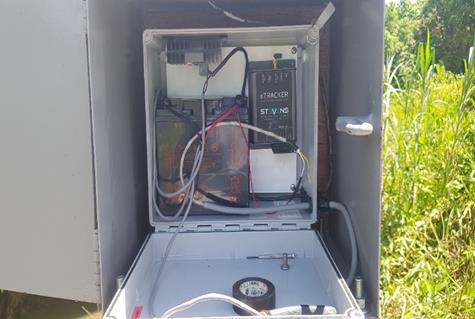
At the onset rainfall intensity gauges and radar river level sensors were connected to Stevens’ loggers using GSM cellular communication. The use of cellular technology was a game changer that revolutionized the way rivers are monitored, and data are collected, thus improving the management of water resources.
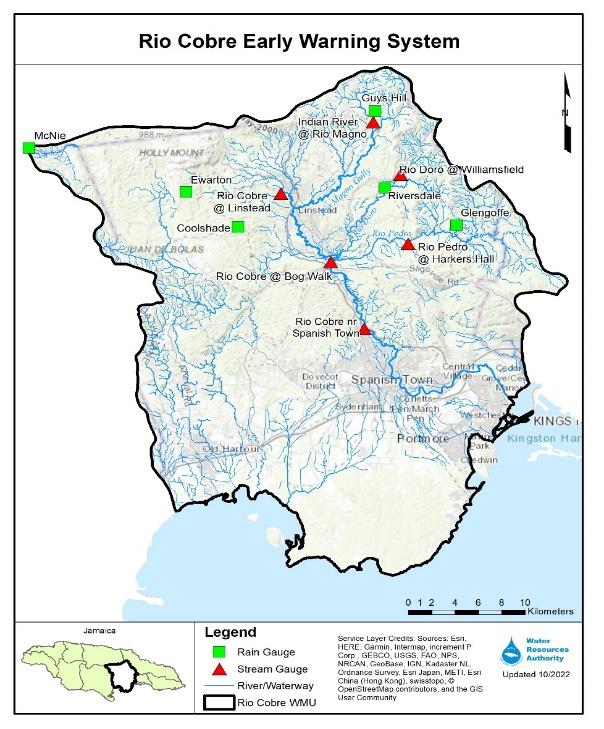
This system was used to revamp the RCFEWS leading to an efficient and effect real-time early warning system.
In 2022, Stevens’ eTracker was gradually upgraded to the Steelhead data acquisition platform.
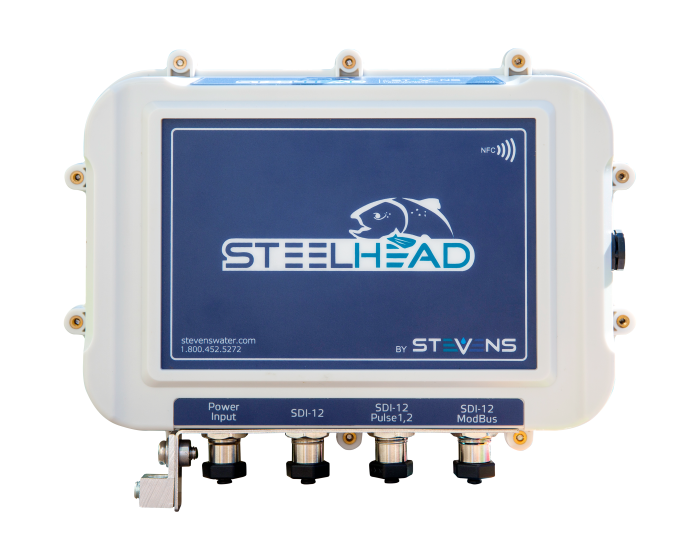
This new technology directly connects with Stevens’ cloud-based data management, analysis and control program SkyView360 (formerly known as Stevens-Connect), for real-time information and insight.
As a result, data and insights from the different stations are now displayed in one control room interface in the WRA Command Center in Kingston, and directly links to authorized personnel for immediate actions under alert conditions.
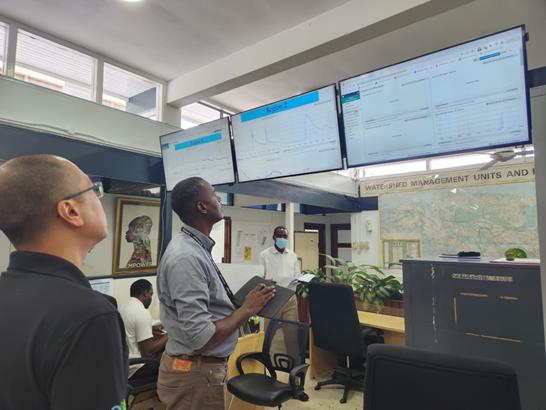
It is important to note that there is a WhatsApp group that consists of the WRA and all relevant first responder agencies including the Police and the Fire Department, ensuring timely communication throughout a potential threatening event.
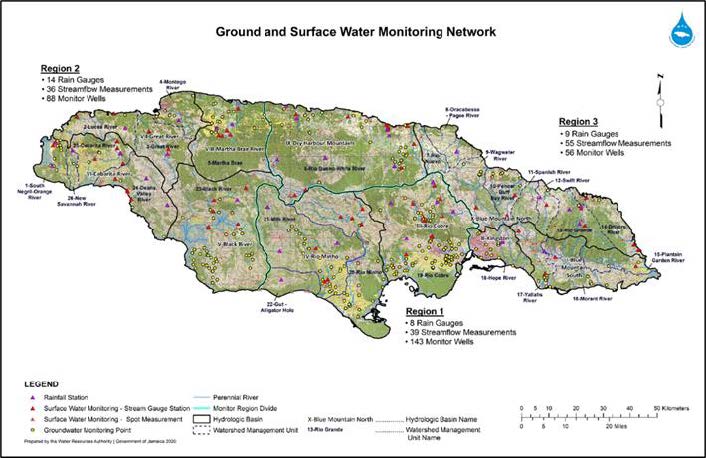
In 2024, Chambers’ RMDCS oversees a network of 31 rainfall intensity sensors (19 of which are real-time), 130 stream gauging stations (30 of which are real-time), radar river level sensors and 275 monitoring wells across Jamaica.
The Authority is working to upgrade the network to have 60 of the stream gauging stations on Stevens’ real-time platform by 2027.
The WRA early flood warning system integrates real-time information on rainfall intensity and water levels from the network incorporating Stevens’ system with community-based flood forecasting models.
Chambers is adamant that “real-time saves lives” and despite a very active 2024 storm season, there has been no direct casualties from flooding within the area of the RCFEWS.
This is in no small part due to the vigilance of RMDCS to maintain the flood early warning system.
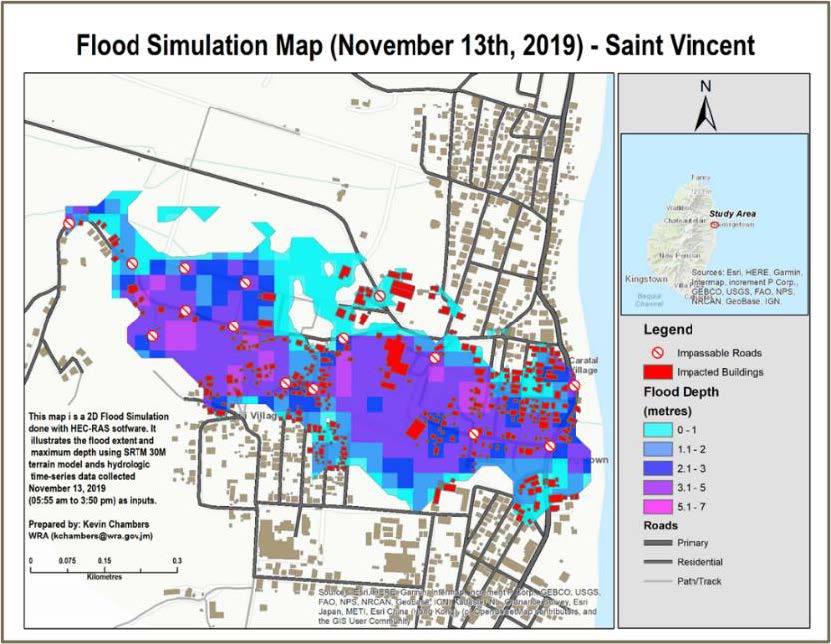
The WRA has also mapped flood prone areas using HECHMS and HECRAS flood simulation models which has greatly assisted in placing community operated flood warning systems in specific areas.
Alerts on river surge and critical flood levels are relayed to first responders and the Office of Disaster Preparedness and Emergency Management, which makes the call on evacuation orders.
As data acquisition systems have evolved over the past 50 years, “the relationship between WRA and Stevens is symbiotic”, says Chambers. The WRA real-time flood early warning system has maintained a flawless performance record since 2017, demonstrating its reliability and significant contribution to saving lives, particularly during unpredictable weather conditions. The WRA is in the process of replicating the Rio Cobre Flood Early Warning System in other areas.
For more information about WRA, contact Kevin Chambers at kchambers@wra.gov.jm.
Stevens specializes in the manufacturing and integration of high-quality sensors, data acquisition equipment, and cloud-based software solutions. Our innovative solutions provide valuable insights into water resources, soil conditions, and weather patterns. We design our advanced solutions to seamlessly integrate with a variety of sensors and data acquisition systems, with the goal of improving the management, visual insights, and optimization of water resources, agriculture, golf courses, sports turfs, and other environmental and energy management applications. Stevens owns SoilMoisture Equipment Corp (www.soilmoisture.com), POGO Turfpro (www.turfpro.com), and Dyacon (www.Dyacon.com).